Home
/Blog
/EcoFlow vs Bluetti: Which Portable Power Station Is Best for You?
EcoFlow vs Bluetti: Which Portable Power Station Is Best for You?
Portable power stations are must haves to keep your devices running. Check EcoFlow vs Bluetti comparison and find out which brand is better for your needs.
 Neha M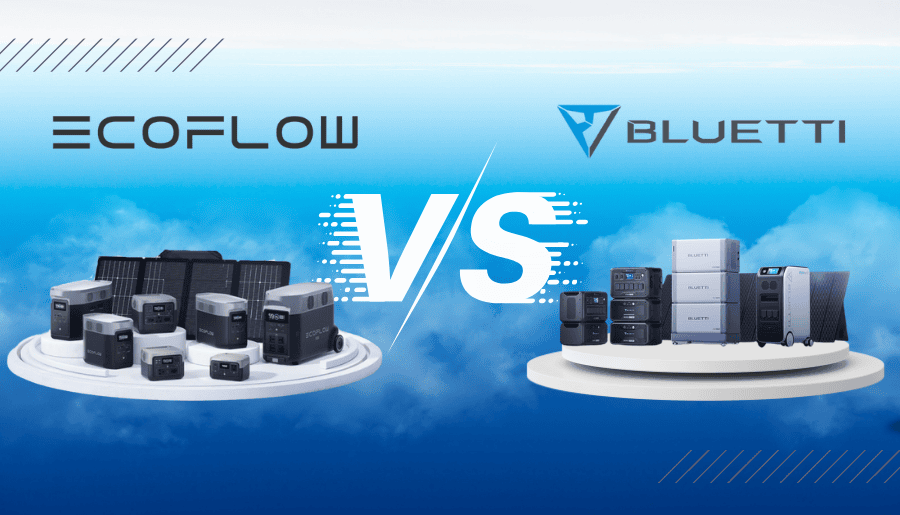
These days, portable power stations are blowing up in popularity. More people are ditching noisy gas generators and grabbing these sleek battery backups instead.
Whether it’s camping out in the wild, tailgating on game day, or keeping the lights on when the grid fails, you need something reliable, safe, and easy to use. And if you’ve been shopping around, you’ve probably noticed Bluetti and EcoFlow for providing quality products.
Bluetti and EcoFlow both are well-known brands with great features, and that's exactly what makes it tricky to decide which one's worth your money.
But don't worry, this comparison is here to help you. We're going to look into these bith brands and compare them based on most essential factors like cost, warranty, safety standards, product quality, and more.
This article will help you choose the best brand that will perfectly fit into your needs and lifestyle. Okay, let’s flip the switch and kick things off.
These days, portable power stations are blowing up in popularity. More people are ditching noisy gas generators and grabbing these sleek battery backups instead.
Whether it’s camping out in the wild, tailgating on game day, or keeping the lights on when the grid fails, you need something reliable, safe, and easy to use. And if you’ve been shopping around, you’ve probably noticed Bluetti and EcoFlow for providing quality products.
Bluetti and EcoFlow both are well-known brands with great features, and that's exactly what makes it tricky to decide which one's worth your money.
But don't worry, this comparison is here to help you. We're going to look into these bith brands and compare them based on most essential factors like cost, warranty, safety standards, product quality, and more.
This article will help you choose the best brand that will perfectly fit into your needs and lifestyle. Okay, let’s flip the switch and kick things off.
EcoFlow vs Bluetti in a Nutshell:
EcoFlow and Bluetti are both well known and trusted brands in USA when it comes to portable power stations. But they're not the same. Let's know what set them apart from each other.
EcoFlow is famous for their sleek design and lightning-fast charging speeds.
Their most popular models are the Delta series and the River series. The Delta is made for heavy use like home backup or RV trips. While the River is smaller and easy to carry around for camping or outdoor fun.
The fast charging feature of EcoFlow can make your gear ready to use in about an hour. Their charging speed is way faster than most brands. They also pack in smart features, app controls, and even options for connecting with your home power setup.
But the thing is they’re not cheap. EcoFlow models usually cost more, and some of them are on the heavier side. Battery life can also vary depending on how much you use it.
On the other side, Bluetti. Bluetti is all about power and durability. Their popular products are the AC200 series, EB series, and the larger EP/AC300 setups.
Bluetti usually gives you more battery capacity for the price, which makes them suitable if you want long-lasting batteries. These stations are also built tough, so they’re great for camping, road trips, or even off-grid living.
But Bluetti units often take longer to charge, and they can be heavy too. Plus, since the brand is still growing in the USA, their customer support may not be as wide-reaching as EcoFlow’s.
In short, EcoFlow feels like the high-tech choice: fast, smart, and easy to use. Bluetti is reliable for work: strong, durable, and good value for the money.
EcoFlow vs Bluetti: Key Things to Compare
When you’re trying to decide between EcoFlow and Bluetti, it helps to break things down into the stuff that really matters. Let’s go through the main points one by one so you can see which brand fits your needs best.
Battery Chemistry & Cycle Life
Most Bluetti models use LiFePO₄ batteries. These batteriees are known for lasting a long time, think 3,500+ cycles before you see real capacity loss. That’s years of regular use. EcoFlow, on the other hand, mixes things up. Some of their Delta and River models use NMC batteries, which are lighter but usually wear out faster (around 800 cycles). Their newer premium models now use LiFePO₄ too, so the gap is closing. If long-term durability matters to you (like for off-grid use) Bluetti usually is a better option.
Capacity & Usable Energy
Capacity is how much energy the station can actually store. Bluetti often gives you more watt-hours per dollar, which means you’re getting longer run times without paying a premium. EcoFlow models tend to be smaller but more balanced with features. So if you’re powering bigger appliances in a blackout, Bluetti’s higher-capacity units might work better. If you just need enough juice for weekend trips, EcoFlow does the job without overkill.
Inverter Power (Continuous & Surge)
This tells you what devices you can run. EcoFlow packs high surge ratings. This means you can fire up power-hungry appliances (like a fridge or coffee maker) without tripping it. Bluetti also offers strong continuous output, but their surge handling can vary by model. If you plan to run household gear during an outage, check these numbers carefully.
Charging Speed
This is where EcoFlow shines. Plug one of their Delta units into the wall, and you can hit 80% in about an hour. That’s crazy fast. Bluetti stations usually take longer, unless you add in solar panels. If you need a sudden power outages solution or something ready to go quickly, EcoFlow win here.
Expandability
Both brands let you add extra batteries to boost capacity. But Bluetti’s modular systems (like the AC300) are more flexible if you’re building a big setup. EcoFlow also offers expansion packs, but they’re more locked into specific models. If you’re thinking about long-term scaling, Bluetti feels more future-proof.
Portability
So, the thing is, Bluetti’s bigger batteries mean more weight. Some of their popular units are heavy enough that you won’t want to move them often. EcoFlow, with its lighter design and built-in handles, is easier to carry around. For camping, tailgates, or moving it from the garage to the backyard, EcoFlow is usually the handier option.
Ports & Outlets
Both brands load up their stations with AC outlets, DC car ports, and USB ports. EcoFlow often includes modern USB-C PD ports (great for laptops and phones). While Bluetti leans on variety and number of ports. If you’ve got a ton of devices to charge at once, Bluetti gives you more options.
Safety & Certifications
Both brands meet USA safety standards and include protections like over-voltage and short-circuit control. EcoFlow tends to push a lot of 'smart' safety features with app monitoring, while Bluetti highlights rugged reliability. Either way, you’re covered for safe use indoors or outdoors.
Warranty & Customer Support
EcoFlow offers a 2-year warranty on most products, with options to extend. Their customer service is pretty solid, and they have good USA based support. Bluetti usually offers longer warranties (up to 4–5 years on some models with LiFePO₄), but their support network in the USA isn’t that big. If you want peace of mind with quick service, EcoFlow might be easier. If you want a longer warranty period, go for Bluetti.
Price & Value
EcoFlow is generally more expensive, but you’re paying for the design, speed, and features. Bluetti gives you more battery capacity for the same money. This makes Bluetti the better "bang for your buck" brand, if capacity matters for you.
In short: EcoFlow is the fast, smart, user-friendly choice.
Bluetti is the bigger, tougher, better-value option.
EcoFlow vs Bluetti: Find the Right Model for Your Budget
EcoFlow and Bluetti both cover almost the entire range of portable power stations. But when you look closer, you’ll see differences in how they shape their product lines and price them. Let’s break it down.
Small / Entry-Level Units (under ~1000 Wh)
Both brands offer compact stations for camping, small devices, or emergency use. If you just need backup for your phone, laptop, or a few small appliances, these are the lightweight models. They’re perfect for camping weekends, tailgates, or short blackouts.
- EcoFlow: River 2, River 2 Max, Delta 2 (around 256 Wh – 1,024 Wh).
- Bluetti: EB3A, EB55, AC70 (268 Wh – 768 Wh).
These are easy to carry around and usually under $800. EcoFlow’s models often charge a lot faster, while Bluetti sometimes gives you a little more watt-hour capacity for the money.
Mid-Range Models (1000–3000 Wh)
This is where most people shop, for road trips, van life, or partial home backup. These devices have enough power to run multiple devices, small kitchen appliances, or keep an RV powered overnight.
- EcoFlow: Delta 2 Max, Delta 3 (about 2,000 Wh).
- Bluetti: AC180, AC200P, AC200L (1,100 Wh – 2,000+ Wh).
You can expect to pay $999 – $1,800 for these units. EcoFlow is often priced a little higher but includes features like app control and very quick recharge. Bluetti’s units are good when you want solid battery life at a slightly lower cost.
High-Capacity / Whole-Home Backup (3000+ Wh)
These are the beasts. If you’re looking for something to keep large appliances running during a power outage, or you live full-time in an RV or off-grid cabin, this is the category to look at.
- EcoFlow: Delta Pro (3.6 kWh expandable up to 25 kWh).
- Bluetti: AC300 with B300 batteries, AC500 with B300S.
Here you’re looking at $1,500 – $5,000+, depending on how many expansion batteries or solar panels you add. EcoFlow leans toward speed, tech, and integration with smart home panels. While Bluetti offers a ton of expandability and usually a slightly lower cost per watt-hour.
Quick Price Comparison
Here's a quick price comparison of Bluetti and EcoFlow product range,
| Category | EcoFlow | Bluetti |
| Small | $299 - $799 | $149 - $600 |
| Mid-Range | $999 - $1,899 | $799 - $1,600 |
| High-Capacity | $1,599 - $3,500+ | $1,500 - $5,000+ |
EcoFlow vs Bluetti: Which Is More Affordable Over Time?
When you’re looking at Bluetti or EcoFlow, the price tag is the important thing you should consider. But the real question is, what’s the actual value over time? Let’s check it out so you don’t end up overpaying or missing hidden costs.
EcoFlow units usually come in with a slightly higher sticker price, especially for their flagship models. Bluetti tends to give you more watt-hours for the dollar, which makes them feel like a better bargain on day one.
But here’s the catch, battery life changes the math. Bluetti’s LiFePO₄ batteries last a lot longer (thousands of cycles), so you might not have to think about a replacement for nearly a decade. EcoFlow’s NMC-based units (unless you buy their LiFePO₄ line) could need attention sooner, which will cost you in a long-term. In other words, what looks cheaper now might cost more in the long run depending on how hard you use it.
IN USA, you don't really deal with import duties when buying from official store or Amazon. But shipping charges can apply if you're ordering directly.
Sometimes, extra adapters, special cables, or proprietary solar panels, can cost you more. EcoFlow's ecosystem is amazing but it might require branded gear to unlock full performance, but this can cost you more. Bluetti products are more like plug-and-play with third-party solar panels. This means you don't need to spend extra money to unlock the full potential of Bluetti products.
Also, the maintenance is pretty minimal for both brands.
Saving tip to make your purchase more Affordable:
One smart move a lot of USA shoppers use is stacking online coupons or discount codes. Big sites like Amazon, Bluetti’s official store, and even EcoFlow’s website often drop limited-time promo codes or seasonal deals. Grabbing one of these codes can cut down a chunk of the cost, and since these units aren’t exactly cheap, even a 10% discount feels like a big win. You can use Bluetti discount code to get up to $50 OFF. And EcoFlow discount code to get up to 50% OFF on Home Power Solutions and more. You can pair these discount coupons with holiday sales like Black Friday, Memorial Day, Year End Sale and enjoy up to 70% discount on your favorite power backup plan.
EcoFlow vs Bluetti: Beyond Just Batteries
When you’re choosing between Bluetti and EcoFlow, the small details often make the biggest difference. Both brands offer some extra features and these features can seriously change how useful the unit feels in real life. So, let's find out which one has better features.
Smart Features That Actually Matter:
Both EcoFlow and Bluetti give you phone apps to track battery levels, adjust settings, and even control the unit without leaving your couch. EcoFlow’s app is smoother and feels a little more modern, almost like controlling a smart thermostat. Bluetti’s app works fine, though some people says that it can act up after updates. If you like to keep an eye on things while you’re away like, leaving your station in the garage or RV then EcoFlow’s remote monitoring feels more reliable.
UPS: Keeping the Lights On Instantly:
UPS stands for Uninterrupted Power Supply. Bsically, if your power goes out, the station instantly flips on to keep things running. EcoFlow is faster at this switch, so fast that most laptops or desktops won’t even blink. That’s a big deal if you work from home or have medical devices plugged in. Bluetti does it too, but depending on the model, the switchover speed can be a hair slower. For running fridges, routers, or TVs, Bluetti is totally fine. For mission-critical stuff, EcoFlow gives a little extra peace of mind.
Solar Input & Charging Efficiency:
If you’re into camping, RV life, or just want to shave some dollars off your electric bill, solar charging is key. EcoFlow usually pulls a bit more power from solar panels, especially on partly cloudy days. Bluetti, though, is more flexible, you don’t always need to buy their branded panels. That’s great for USA shoppers who already own cheaper third-party panels or want to shop around. In short: EcoFlow = faster solar charging, Bluetti = cheaper and more flexible options.
Expandability & Accessory Ecosystems:
EcoFlow thinks big-picture. Their stations can grow into full setups with extra batteries, smart home panels, and even integration for whole-house backup. Bluetti offers expansion batteries too, but they focus more on giving you raw extra storage rather than a full ecosystem. If you want a unit that grows with you (perfect for homeowners thinking long term) EcoFlow might be your jam. If you just want to add a little more juice when needed, Bluetti keeps it simple.
New Tech: What’s Around the Corner:
Bluetti has been testing sodium-ion batteries, which work way better in cold weather. That’s a win if you live in places like the Midwest or Northeast where freezing winters can mess with battery performance. EcoFlow is going all-in on smart-home systems like their Ocean Pro, which feels like a mini Tesla Powerwall for your house. So, if you want better cold-weather reliability choose Bluetti and for cutting-edge smart-home integration choose EcoFlow.
So, who's better in a matter of Extra Features?
If you’re all about smart tech and want a setup that grows with your home, EcoFlow is the stronger pick. But if you care more about battery life in tough weather and flexibility with gear you already own, Bluetti might give you more bang for your buck.
Bluetti vs EcoFlow: Which Is Better For Real-World Performance?
When it comes to real life, specs on paper don’t always tell the whole story. You’ve got to think about where and how you’ll actually be using your power station.
For Emergency Backup (Blackouts)
Power outages are no joke, whether it’s storms, heat waves, or grid issues. In these situations, reliability and run-time matter most. Bluetti usually wins here because of its LiFePO₄ batteries that last longer and provide steadier performance. Plus, the higher capacity models give you more hours of backup for fridges, medical devices, or even space heaters.
EcoFlow, on the other hand, charges way faster. So if you’ve got a few hours of grid power before another blackout hits, you can top it up quickly.
Which is Better? If you want long-lasting system, Bluetti feels safer. If you want speed and readiness, EcoFlow has your back.
For RV / Van Life / Off-Grid Living
Hitting the road or setting up in the middle of nowhere means you need something portable but strong. EcoFlow’s fast solar input and expandable battery packs make it super handy if you don’t want to sit around waiting for panels to top off.
But Bluetti brings rugged builds and better price-per-Wh value. This matters when you’re running multiple gadgets or appliances daily. If you’re living full-time off-grid, Bluetti’s larger, beefier setups are usually the smarter buy.
So, for more weekend-style RV trips, EcoFlow’s lightweight, quick-charge units feel more convenient.
For Outdoor / Camping Trips
When you’re hauling gear to a campsite or tailgate, weight and ease of carry become a big deal. EcoFlow has slimmer, lighter models with grab-and-go handles that make them less of a hassle. They also tend to run quieter, which is nice when you don’t want your campsite sounding like a generator.
Bluetti does have portable options, but they’re often heavier. If your idea of camping is closer to glamping with multiple gadgets, Bluetti’s extra capacity helps. If it’s casual weekend camping, EcoFlow feels more user-friendly.
For Everyday Use (Charging Devices & Small Appliances)
A lot of people don’t buy powe backup systems just for emergencies. These gadgets are useful around the house or yard too. For daily charging of phones, laptops, and small kitchen gadgets, both brands do the job well.
EcoFlow usually offers more modern ports (like multiple USB-C fast-charge options). This is perfect if your family is always fighting over outlets. Bluetti brings solid efficiency, but some models feel more old-school in port variety. For everyday, casual use, EcoFlow feels a little more convenient.
EcoFlow vs Bluetti: Pros and Cons at a Glance
What EcoFlow Does Best:
- Super-fast charging speeds (AC and solar both charge quicker than most competitors).
- Slick, easy-to-use app for remote monitoring and control.
- Strong UPS feature, switches to backup power almost instantly.
- Expandable ecosystem, extra batteries, smart home panels, and whole-home integration.
- Compact, modern design that’s easier to move around.
Where EcoFlow Lags:
- Many models use NMC batteries, which don’t last as long as Bluetti’s LiFePO₄ (though EcoFlow is adding more LiFePO₄ options).
- Can be more expensive up front compared to Bluetti.
- Some accessories and add-ons are proprietary, meaning extra costs if you want the full setup.
- Fan noise on certain models can be noticeable.
What Bluetti Does Best:
- Uses LiFePO₄ batteries in most models gives super long lifespan, thousands of cycles.
- Great value for the money, specially in terms of cost per watt-hour.
- Rugged and durable designs that can handle rough use (good for camping or RV life).
- Flexible with third-party solar panels which makes it less locked into branded gear.
- Longer warranties (often 4–5 years on bigger models).
Where Bluetti Lags:
- Charging speeds are usually slower than EcoFlow.
- Units can be heavier and bulkier, not as easy to carry around.
- App experience isn’t always as smooth, gives occasional glitches.
- Customer service in the USA has improved but still isn’t as fast or polished as EcoFlow’s.
EcoFlow vs Bluetti Final Verdict: Which Should You Pick?
Choosing between EcoFlow and Bluetti isn’t about which brand is better overall. It’s about what you need most. Both brands make solid power stations, but they shine in different ways. Let’s break it down so you can make the call without second-guessing yourself.
If you care about fast charging and smart features, EcoFlow is the best. Their units can recharge in just over an hour in many cases, and the mobile app makes it easy to keep tabs on your power. That’s perfect if you don’t like waiting around or if you’re using it often in day-to-day life.
If you value long runtime and expandability, choose Bluetti. Their LiFePO₄ batteries often last longer and their modular systems let you add more batteries as your needs grow. That’s huge if you’re powering an RV, living off-grid, or planning for serious backup.
At the end of the day, here’s the decision matrix:
- If you want speed go with EcoFlow.
- If you want longevity go with Bluetti.
- If you want tech and smart home support go with EcoFlow.
- If you want flexibility and value per dollar go with Bluetti.
Both brands are safe bets, and either way, you’re investing in backup power that makes your life easier.
Final Thoughts:
That’s a wrap on our EcoFlow vs Bluetti comparison. At the end of the day, there’s no single winner here, it all comes down to your own needs. Don’t just pick the brand people say is the best. Pick the one that’s best for you, whether that means faster charging, longer battery life, or better value for your budget.
If you found this guide helpful, let us know! Got questions we didn’t cover? Drop them in the comments, we’d love to hear from you. And if you’ve used EcoFlow or Bluetti yourself, share your experience so others can learn from it too.
Looking to grab one of these power stations? Keep an eye out for deals and coupons, you might save a nice chunk of cash on your purchase.
FAQs:
1. Which is better, EcoFlow or Bluetti?
EcoFlow and Bluetti both are good but the best brand depend on your individual needs. EcoFlow is great if you want super-fast charging, smart app control, and smooth home backup features. Bluetti is better if you care about longer battery life, expandable setups, and better value per dollar.
2. Which is better, Bluetti AC180 or EcoFlow Delta 2?
The EcoFlow Delta 2 charges much faster and has app support, making it super convenient in emergencies. The Bluetti AC180 lasts longer, gives a little more capacity, and usually costs less. So, if speed matters for you then pick Delta 2 and if runtime and value matters most for you, pick AC180.

Unlock Savings, Every Day!
Stay Updated with the Latest Coupons, Deals, and Exclusive Offers Tailored for You.